At some point you get tired of living like a zombie
At some point you want to stop filling your brain with mundane crap
At some point you want to taste your food when you're eating
At some point you want to give more time to the profound
Over the trivial
At some point you want to stop distracting yourself from life
From the present
Whether or not it's painful
Or god forbid, boring
Because being with it means
You are alive
And that you know that
At some point you want to stop resisting
Everything that comes your way
Even if it sucks, even if you don't like it
Because it's just too hard to keep pushing
At some point you want to learn how to live in complete love
Make friends with the world
Because when you leave this place, you leave blameless
Otherwise you're coming back
To wrap up unfinished business
At some point you want to just be real with people man
Go past the how-you-going-good-thanks roleplay
At some point you want to talk about how life is actually quite sad
At some point you want to put it all down
Because it's just too heavy otherwise
At some point it has to be enough
At some point you want to go beyond what the six senses can give you
Look deep into this mind that you think you know
Because at the end of life, when the body shuts down --
What can you depend on for security but your awareness?
At some point you ask yourself why you're here
Why you put up with this neverending drone
This Groundhog Day, really
You take a step back and look
Everyday is the same, so where do you find meaning?
Are you satisfied just going on like this?
Where do you find the fulfillment that is so promised in movies?
Good food -- does it really taste that good?
Good looks -- how long does that last?
True love -- and what is that?
Where is it?
Always here and now.
The meaning is in the knowing.
Because if you don't know,
You're as good as dead,
You're a zombie
Maybe life is about answering those questions
Why were you born
Why are you here
Why do we suffer
And what does it all mean
At some point you want to stop filling your brain with mundane crap
At some point you want to taste your food when you're eating
At some point you want to give more time to the profound
Over the trivial
At some point you want to stop distracting yourself from life
From the present
Whether or not it's painful
Or god forbid, boring
Because being with it means
You are alive
And that you know that
At some point you want to stop resisting
Everything that comes your way
Even if it sucks, even if you don't like it
Because it's just too hard to keep pushing
At some point you want to learn how to live in complete love
Make friends with the world
Because when you leave this place, you leave blameless
Otherwise you're coming back
To wrap up unfinished business
At some point you want to just be real with people man
Go past the how-you-going-good-thanks roleplay
At some point you want to talk about how life is actually quite sad
At some point you want to put it all down
Because it's just too heavy otherwise
At some point it has to be enough
At some point you want to go beyond what the six senses can give you
Look deep into this mind that you think you know
Because at the end of life, when the body shuts down --
What can you depend on for security but your awareness?
At some point you ask yourself why you're here
Why you put up with this neverending drone
This Groundhog Day, really
You take a step back and look
Everyday is the same, so where do you find meaning?
Are you satisfied just going on like this?
Where do you find the fulfillment that is so promised in movies?
Good food -- does it really taste that good?
Good looks -- how long does that last?
True love -- and what is that?
Where is it?
Always here and now.
The meaning is in the knowing.
Because if you don't know,
You're as good as dead,
You're a zombie
Maybe life is about answering those questions
Why were you born
Why are you here
Why do we suffer
And what does it all mean
Okay I don't know why I'm doing this right now. It's the middle of take-home exam week and I have a thing due on Friday and I've decided to write this post in the ERC library. Taking a quick break from my take-home exam so thought I'd write this quickly.
Today I've been turning up the metta dial. Today is one of those days where you wake up from a nightmare that plays on your mind even in waking moments of the day and feel like crying at any given moment. Therefore turning up the metta dial to full blast is the only way I know how to cope with the conditions of the mind today.
I told myself, metta for everything that arises. I told myself to make it a game. Can you live every moment in complete love? Can you respond to everything with metta? Everytime you do, you win merit / happiness points.
Gotta do stuff like that man, life is just too heavy otherwise.
During Q&A after the meditation session on robe-offering ceremony day, someone told the Ajahns they were dealing with disturbing thoughts that kept arising out of the blue without their control. They asked how to get rid of it permanently.
Ajahn Hāsapañño giggled. I can't even remember what he said because the fact that he laughed was more of a statement to me. I think it's because you can't obliterate your thoughts like that, and not "permanently". I think even the Noble Ones have to deal with sankharas (mental formations), but the difference is they don't pick it up and own it. So the solution is not to get rid of it. Not yours in the first place.
Ajahn Bom chimed in, with his limited English, which makes it all the more endearing because whatever he has to say is just then so simple and so precious. I think he said he had been dealing with some unwholesome thoughts that morning / the night before as well in his kuti, and it just wouldn't stop arising. So then he thought to himself, "This thinking - I can have metta for it too. If you want to stay, you can stay. And you can go when you want to go."
Dude.
Like, okay. I think you need to be there to feel the significance of what he said. Ajahn Bom is one of the most harmless and joyful monks I've ever met. He has this childlike innocence and purity to him, very gentle and kind. So when he said that, it was just like. Yes. Of course. Gentleness is the only way.
Complete receiving. Meeting everything with kindness.
Because then there is space and lightness, instead of suffering upon suffering.
I think that's what I've been trying to do today. Whatever arises, it's okay. You can stay as long as you like. And you may go as you please. You can burst into a fountain of tears if you like. You can feel broken and battered if you like. All good. None of my business.
Also, okay, a super quick one. The other day Ajahn Hāsapañño was telling epic stories of meeting wild animals in the forest. He told of Ajahn Gunha, who is reputed for his epic metta.
So the king cobra is the scariest animal in the forest. It will just strike, it looks for trouble, unlike other snakes who usually mind their own business. Super deadly. One time a king cobra went up to Ajahn Gunha and stood up and faced him. Ajahn Gunha just petted its head and said "Thank you for coming to visit me". Metta on full blast. Then it slithered to the next monk and did the same, and that monk was scared out of his wits obviously.
Dude. I WANT TO BE THAT BADASS AND POWERFUL. Like how much peace you would have had to make within yourself to make friends with a king cobra, you know what I mean? In that way you overcome all enemies. I CANNOT. It's just so badass. You're untouchable with boundless metta. Oh man my heart.
Okokokok, back to Japanese youth problems.
Today I've been turning up the metta dial. Today is one of those days where you wake up from a nightmare that plays on your mind even in waking moments of the day and feel like crying at any given moment. Therefore turning up the metta dial to full blast is the only way I know how to cope with the conditions of the mind today.
I told myself, metta for everything that arises. I told myself to make it a game. Can you live every moment in complete love? Can you respond to everything with metta? Everytime you do, you win merit / happiness points.
Gotta do stuff like that man, life is just too heavy otherwise.
During Q&A after the meditation session on robe-offering ceremony day, someone told the Ajahns they were dealing with disturbing thoughts that kept arising out of the blue without their control. They asked how to get rid of it permanently.
Ajahn Hāsapañño giggled. I can't even remember what he said because the fact that he laughed was more of a statement to me. I think it's because you can't obliterate your thoughts like that, and not "permanently". I think even the Noble Ones have to deal with sankharas (mental formations), but the difference is they don't pick it up and own it. So the solution is not to get rid of it. Not yours in the first place.
Ajahn Bom chimed in, with his limited English, which makes it all the more endearing because whatever he has to say is just then so simple and so precious. I think he said he had been dealing with some unwholesome thoughts that morning / the night before as well in his kuti, and it just wouldn't stop arising. So then he thought to himself, "This thinking - I can have metta for it too. If you want to stay, you can stay. And you can go when you want to go."
Dude.
Like, okay. I think you need to be there to feel the significance of what he said. Ajahn Bom is one of the most harmless and joyful monks I've ever met. He has this childlike innocence and purity to him, very gentle and kind. So when he said that, it was just like. Yes. Of course. Gentleness is the only way.
Complete receiving. Meeting everything with kindness.
Because then there is space and lightness, instead of suffering upon suffering.
I think that's what I've been trying to do today. Whatever arises, it's okay. You can stay as long as you like. And you may go as you please. You can burst into a fountain of tears if you like. You can feel broken and battered if you like. All good. None of my business.
Also, okay, a super quick one. The other day Ajahn Hāsapañño was telling epic stories of meeting wild animals in the forest. He told of Ajahn Gunha, who is reputed for his epic metta.
So the king cobra is the scariest animal in the forest. It will just strike, it looks for trouble, unlike other snakes who usually mind their own business. Super deadly. One time a king cobra went up to Ajahn Gunha and stood up and faced him. Ajahn Gunha just petted its head and said "Thank you for coming to visit me". Metta on full blast. Then it slithered to the next monk and did the same, and that monk was scared out of his wits obviously.
Dude. I WANT TO BE THAT BADASS AND POWERFUL. Like how much peace you would have had to make within yourself to make friends with a king cobra, you know what I mean? In that way you overcome all enemies. I CANNOT. It's just so badass. You're untouchable with boundless metta. Oh man my heart.
Okokokok, back to Japanese youth problems.
Big Metta! 💖
I know I've been posting way more recently, I think part of that is how immobile I am at the moment! Talking to myself on this blog has been a kind of solace. Part of that is also having an excuse to procrastinate - I have a mid-sem test on Wednesday but you know, this is obviously more important hahaha.
Yesterday was the end of the Vassa - the three-month long annual Rains Retreat wherein monastics in the Theravada tradition intensify their practice. They usually observe greater seclusion during this time, not leaving the monastery too much (except to go on almsround) and engaging in more meditation practice.
I've never really seen the Vassa as a special period for my practice or anything like that. It was always 'oh, that's just what monks do for three months, that's not really anything to do with me'. But I think at the back of my head I would sometimes float ideas of like, 'ooh what if I observed a special practice during this period' or 'what if I take the 8 precepts during this period'. But I never engaged in it, just remained as ideas.
This Vassa was the first time I felt like I had some kind of active participation. Before the Vassa, around mid-July, Damo, Bec and I went to stay at Wat Buddha Dhamma in Wisemans Ferry, NSW. I stayed for only two weeks while the rest (including Ash, who joined later) stayed for the rest of the Rains.
The Wat is a very special place. It is located 40 minutes drive into Dharug National Park, which makes it very quiet and secluded; the only hints of civilisation come from the occasional sounds of planes flying overhead, scout groups camping around the area, passing cyclists, and so on.
This retreat was a turning point for me. There are so many things that happened and that I learned, but it's so hard to write it all out like this (trust me, I've tried a few times - those posts are still in drafts haha). Let's just say they were really important experiences that I needed to step up in my practice, and I'm just so glad I went.
I used to have a big fear of my mind on retreats (still kind of do, but this retreat did so much to help me overcome that) because I tend to push too hard, wanting to achieve all sorts of things. But on this retreat, I made the decision to go because I wanted to go. I tried my best to make sure I wasn't coming from a place of obligation - some idea that I had to go and practise. In fact, I decided not to go at one point - but then listened to this amazing timely talk by Aj Sumedho that made me want to take on the challenge. Because, if not now, when?
I wrote a list of things to remember during the retreat, in a notebook that I brought along to write reflections in. They were words I needed to uplift me when I fell back into the habit of idealism and striving for perfection, and I often looked back at them and tried to incorporate them into my practice. Perhaps this will give you an idea of what I gained from the experience:
Sunday 14th July
Staying @ WBD.
1. Practise patience. Learn to endure the unendurable.
2. Going nowhere, wanting nothing.
3. Here to practise and train, not to achieve perfection and liberation.
4. The mind will go crazy, like an animal. This is normal. Surrender. (Context: Aj Sumedho talk previously mentioned)
5. Ride that elephant. Go it. (Context: this epic sutta)
6. The trump card: The Buddha existed, and he was fully enlightened. (Context: 'The Trump Card' on pg 241 in Beginning Our Day (vol 1))
7. The First Noble Truth: fully know, fully recognise suffering.
8. Do and let go. Not practising becoming.
9. It is always okay!
10. Ask yourself what you're clinging to. "Perhaps not even thinking, 'I can do it' or 'Maybe I can do it', but just a wordless trying without expectation, a wordless spaciousness. Just try. Just fall. Have fun. Don't take it so serious. It's about the climb!"
11. Surrender.
12. Take all the time in the world. Whatever you need to be still.
13. Put a smile on your dial! ❤️
Context for no. 8:

It was the most fruitful retreat for me, not because I attained all sorts of elevated states in meditation. But because I began to form an understanding of what it means to 'live the Dhamma'. The structure offered by the Ajahn Chah tradition is amazing - it truly is a lifestyle in which Dhamma is practised, instead of this is my life, and this is my practice, and the two are separate.
Another super important thing I learned is that a retreat is not for you to just 'get your samadhi' but cultivate whatever paramis you can cultivate - whether that is patience or persistence, etc. And I think this applies to the whole of the practice. More important than trying to 'get samadhi' is to cultivate a spaciousness of mind. I love this so much man. So much less dogmatic, and more about skilful means - how can I work skilfully with the conditions I have now? How can I work with the tools I have available? So then every condition provides an opportunity to cultivate, rather than fooling yourself into thinking 'I need perfect conditions, then I can practise'.
For me, a lot of this retreat was correcting my ideas about what it means to practise and 'progress', and the backbone of that all was patience. I needed to be patient with my hectic mind, the delusion, the mental agitation. If I couldn't yet cultivate samadhi or tranquility, I could at least cultivate patience. I remember in one of Ajahn Sumedho's books, he said: "I’m developing patience. If I just learn to be patient in this lifetime, I’ve not wasted it. Just to be a little more patient is good enough." (Chapter 8, Patience). Ajahn says patience is such an underrated virtue, it seems really average and like unexciting compared to 'more profound' qualities like samadhi and wisdom. But patience is one of the highest virtues - patience brings you to the end of the path. If you had the patience to endure all that is unendurable, how could you not succeed in the end?
It was funny because I went into the retreat with this resolve of wanting to cultivate patience. On Saturday nights at the Wat, Ajahn Tiradhammo would be invited to give a Dhamma talk. For the very first one to kick off the Vassa, he spoke about patience. He said patience is important - we need a long-term view of the practice. If we are always willing to return to the practice and endure whatever conditions that are difficult, eventually we reach the unconditioned, which is behind all the conditions.
I think that says something about the quality of patience. It's not the teeth-gritting forcefulness we usually understand to be 'endurance', but more like being at peace with things, which I think necessarily involves letting go. I remember someone saying patience is the closest quality to what we call 'letting go'.
Referring back to the Taoist teaching I posted a while ago, there's one line that says: "Be patient and you will achieve all things". Hardcore wisdom right there. Life is a paradox.
Recently I had the reflection that if I am struggling in my practice, it means that I am trying. If I am at least trying, then that is a good sign. That's a different way to look at challenges, which I usually find discouraging.
Another important thing I learned from this retreat was the concept of ease. Which sounds like it should come really easy (pun intended), but for a neurotic mind like mine, nah man. I don't really want to get into the details but watching the monks go about their day-to-day made me understand what ease really means. I guess it's tough, because we have ideas of needing to exert effort and strive and push, and we apply our worldly understanding of what effort means to the whole practice. I'd been reading so much about 'relaxed effort' before and just trying to wrap my head around that whole idea of 'non-striving' but really, I needed to see these qualities embodied.
I was so fortunate, because some of the monks there were really the most easy-going. Ajahn Khemavaro was this force of nature that brought lightness into every situation. There was so much laughter and joy with him around, there was one sutta study session we had with him where we were just laughing uncontrollably. Ajahn Tiradhammo was also just such a joyful presence to be around, with a childlike quality of joy and humour. Jillo explained the monks are strict, but they do not force. I love that.
It’s easy for me to describe what they are like, but nothing can ever compare to being in their presence.
Staying among the Sangha like that for the first time taught me the value of keeping noble company, 'the sight of Samanas' as mentioned in the Mangala Sutta. Nothing compares to that lived experience. It was only after staying at WBD that I saw how truly conducive the Sangha was for practice, compared to lay life.
I wrote this in one of the entries in the notebook:
"Out of all the places I have been to stay and practise, this is the best. In my heart, the teaching here feels right. I feel very lucky and grateful. Also that I have Damo, Bec, Jillo, Derek, Aj T & Aj K and the rest of the wonderful community here. Part of me doesn't want to leave. I will know what I am missing. I think no matter how tough the mind was to handle that day, you do not look back on that time and regret it. Because you have at least had one mindful inhalation. At least one mindful moment. At least some wholesomeness. You have lived meaningfully, which does not necessarily mean it is always pleasure and happiness. You feel you are pursuing something noble, albeit difficult."
It's really not easy living such a different way of life like that. Everyday can be challenging. Everyday is a battle against the mind. Mad respect for the Sangha, who endure what is difficult to endure.
Coming back to Melb, I was really excited to go see Ajahn Hasapañño and tell him all my experiences. He gave me lots of encouragement, and I was so happy.
With my big brothers and sister gone, and Angie and Mabel away, I was spending a lot of my time with Meow and KahHoe - and later, Dara. Dara lives on my street but we were never close before. This Vassa brought us much closer together.
Dara's right effort is mad inspiring. This year at Vimokkharam Forest Hermitage (I think you can call it my home monastery), Ajahn Hāsapañño started opening up the Vassa evening chanting and meditation to the public. In past years, this wasn't a thing because having only one resident monk made it difficult if women were to come up to the hermitage without men. This year, Ajahn Bom from Ajahn Dtun's monastery in Thailand came to stay with Ajahn Hāsapañño, and that gave us laypeople the opportunity to partake in these nightly sessions.
I didn't appreciate the sessions until Dara started inviting me to go. She was like a total powerhouse man, she was trying to go as many nights as she could because she would have put in so much effort by the end of the Rains that it would help her practice for sure (and it definitely has). She really appreciated that Ajahn was doing this for the lay community. Since she lives on my street and drives a car, I've been lucky to be able to go along with her as well. I haven't done as much time as she has, but I've definitely benefitted from the sessions.
During the night time sessions, the monks make it a point not to engage in too much conversation with laypeople. The idea is that you're heading up to Vimo just to practise. Chant, meditate, then go home. There's something really special about that - and Vimo at night. The energy and solitude just makes it really conducive for cultivating that spaciousness and calmness of mind.
Yesterday we had the robe offering ceremony at Vimo. Only on these big occasions does Ajahn Hāsapañño give talks, and usually they're pretty short. But he gives his whole heart and they always leave an impression on me. Yesterday he spoke about how inspiring the community has been. Some people have made it a point to keep their Five Precepts unbroken during the Vassa, some have determined to keep the Eight Precepts, which is very hard for laypeople. Some have determined to offer food to the Sangha every single day without fail. Some have upheld these practices, and this is inspiring.
Ajahn also said that the last time he opened the nightly sittings to the public, there weren't very many people who came. But this year, many people showed up to practise, and out of the entire Rains, there were only 3 nights that no one showed up.
Ajahn said he sacrifices a lot of his personal time to help people with their problems. He said that it is the most gratifying feeling when other people in our universities or workplaces see that we have practised, and see value in that. When he hears these stories, he feels the sacrifice is worth it.
Ajahn said this community at Vimo is a good one. He said it is doing better than it ever has in the history of the hermitage.
I was just tearing up listening to the talk. I felt so grateful to be part of this community of Dhamma.
(Edit: the talk was recorded and posted here - very rare)
Here are some pictures:


To end an epic Vassa, me, Xeyiing and Dara decided to make it a full day of practice and stayed for afternoon and evening meditation. It was truly a beautiful day, and a beautiful end to the Rains.
I definitely did not have a full-on hardcore Vassa like other practitioners did, but I put in some effort during the Rains, and that's something I rejoice in and am contented with. Ajahn said yesterday mudita or appreciative joy is something that is unique to the Buddha's teaching. It's alright to pat yourself on the back hehe.
Going forward, I aspire to amp up my dana (generosity) practice - I find I'm lacking in this area. Dara is super strong in her dana practice so I'm gonna be rubbing off her for that one.
I also aspire to refine my sila (morality). Yesterday Ajahn was talking about sila and how it creates safety for the world and for oneself. He said that in keeping your precepts well, you create trust in yourself that no matter how far you fall, there is a certain standard you will still adamantly uphold - the Five Precepts. No matter how badly you're doing, you can take solace in that. He also told us about a thought-experiment Ajahn Vajiro sometimes mentions: imagine if everyone in Melbourne kept the Five Precepts. We wouldn't need keys or policemen. That's the kind of world we can create within the monastery, but when we leave, we have to be careful.
He then started telling all these epic stories of Krooba Ajahns (senior teachers in the Thai Forest Tradition) who have kept such good sila in this and past lives that minimal physical harm comes to them. These stories sometimes sound hard to believe so I won't post them here. All I know is, I want to be that powerful. This is true safety -- one of those things no amount of wealth, fame and power can afford you.
Ajahn said his teacher LP Liem doesn't talk too much about the brahma-viharas (loving-kindness, compassion, appreciative joy and equanimity) because if you're really keeping sila in your heart, these qualities arise naturally.
So yes, I hope to fine my sila till it's imprinted in the heart.
And of course, keep going with the meditation hehe.
So grateful for all these blessings!!!
Okay, I think that's all for now - I should really get back to studying sociolinguistics man.
Yesterday was the end of the Vassa - the three-month long annual Rains Retreat wherein monastics in the Theravada tradition intensify their practice. They usually observe greater seclusion during this time, not leaving the monastery too much (except to go on almsround) and engaging in more meditation practice.
I've never really seen the Vassa as a special period for my practice or anything like that. It was always 'oh, that's just what monks do for three months, that's not really anything to do with me'. But I think at the back of my head I would sometimes float ideas of like, 'ooh what if I observed a special practice during this period' or 'what if I take the 8 precepts during this period'. But I never engaged in it, just remained as ideas.
This Vassa was the first time I felt like I had some kind of active participation. Before the Vassa, around mid-July, Damo, Bec and I went to stay at Wat Buddha Dhamma in Wisemans Ferry, NSW. I stayed for only two weeks while the rest (including Ash, who joined later) stayed for the rest of the Rains.
The Wat is a very special place. It is located 40 minutes drive into Dharug National Park, which makes it very quiet and secluded; the only hints of civilisation come from the occasional sounds of planes flying overhead, scout groups camping around the area, passing cyclists, and so on.
 |
| The only picture I took of the Wat! This is the view from outside the dana / kitchen area. I can almost hear the birds... |
 |
| Some residents of WBD during the Rains. Some were not pictured (probably off doing monastery work somewhere). From left to right: (Top row) Ajahn Chaiyaporn, Ajahn Khemavaro, Luang Por Tiradhammo, Ajahn MahaAir, Ajahn Sudhammo, Ajahn Krich, Anagarika Jillo. (Bottom row) Kelly, Damian, me, David, Rebecca. |
I used to have a big fear of my mind on retreats (still kind of do, but this retreat did so much to help me overcome that) because I tend to push too hard, wanting to achieve all sorts of things. But on this retreat, I made the decision to go because I wanted to go. I tried my best to make sure I wasn't coming from a place of obligation - some idea that I had to go and practise. In fact, I decided not to go at one point - but then listened to this amazing timely talk by Aj Sumedho that made me want to take on the challenge. Because, if not now, when?
I wrote a list of things to remember during the retreat, in a notebook that I brought along to write reflections in. They were words I needed to uplift me when I fell back into the habit of idealism and striving for perfection, and I often looked back at them and tried to incorporate them into my practice. Perhaps this will give you an idea of what I gained from the experience:
Sunday 14th July
Staying @ WBD.
1. Practise patience. Learn to endure the unendurable.
2. Going nowhere, wanting nothing.
3. Here to practise and train, not to achieve perfection and liberation.
4. The mind will go crazy, like an animal. This is normal. Surrender. (Context: Aj Sumedho talk previously mentioned)
5. Ride that elephant. Go it. (Context: this epic sutta)
6. The trump card: The Buddha existed, and he was fully enlightened. (Context: 'The Trump Card' on pg 241 in Beginning Our Day (vol 1))
7. The First Noble Truth: fully know, fully recognise suffering.
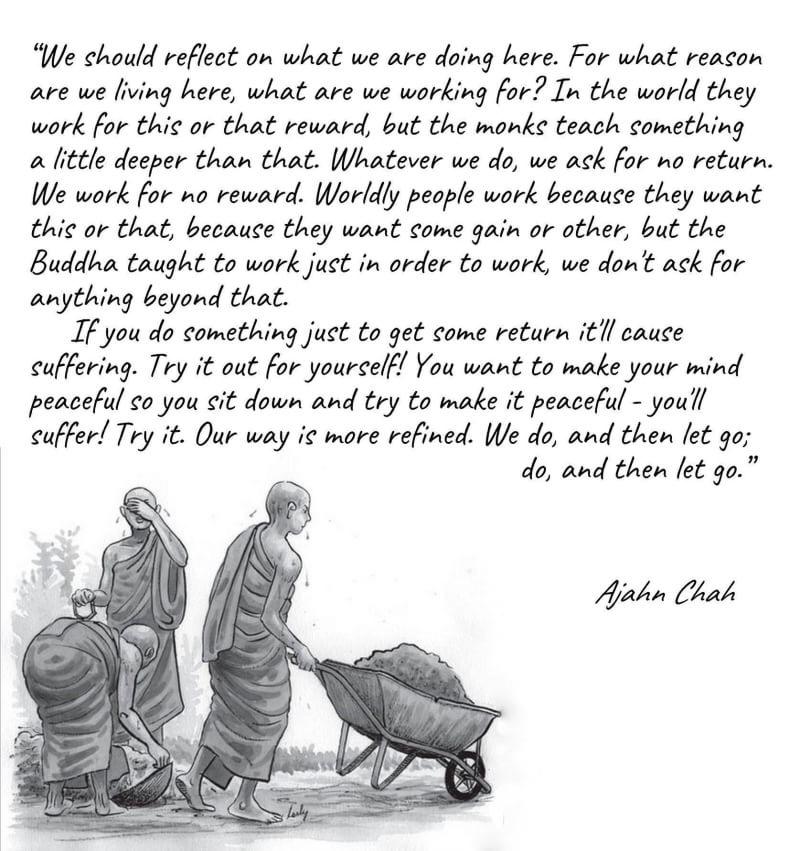
8. Do and let go. Not practising becoming.
9. It is always okay!
10. Ask yourself what you're clinging to. "Perhaps not even thinking, 'I can do it' or 'Maybe I can do it', but just a wordless trying without expectation, a wordless spaciousness. Just try. Just fall. Have fun. Don't take it so serious. It's about the climb!"
11. Surrender.
12. Take all the time in the world. Whatever you need to be still.
13. Put a smile on your dial! ❤️
Context for no. 8:
It was the most fruitful retreat for me, not because I attained all sorts of elevated states in meditation. But because I began to form an understanding of what it means to 'live the Dhamma'. The structure offered by the Ajahn Chah tradition is amazing - it truly is a lifestyle in which Dhamma is practised, instead of this is my life, and this is my practice, and the two are separate.
Another super important thing I learned is that a retreat is not for you to just 'get your samadhi' but cultivate whatever paramis you can cultivate - whether that is patience or persistence, etc. And I think this applies to the whole of the practice. More important than trying to 'get samadhi' is to cultivate a spaciousness of mind. I love this so much man. So much less dogmatic, and more about skilful means - how can I work skilfully with the conditions I have now? How can I work with the tools I have available? So then every condition provides an opportunity to cultivate, rather than fooling yourself into thinking 'I need perfect conditions, then I can practise'.
For me, a lot of this retreat was correcting my ideas about what it means to practise and 'progress', and the backbone of that all was patience. I needed to be patient with my hectic mind, the delusion, the mental agitation. If I couldn't yet cultivate samadhi or tranquility, I could at least cultivate patience. I remember in one of Ajahn Sumedho's books, he said: "I’m developing patience. If I just learn to be patient in this lifetime, I’ve not wasted it. Just to be a little more patient is good enough." (Chapter 8, Patience). Ajahn says patience is such an underrated virtue, it seems really average and like unexciting compared to 'more profound' qualities like samadhi and wisdom. But patience is one of the highest virtues - patience brings you to the end of the path. If you had the patience to endure all that is unendurable, how could you not succeed in the end?
It was funny because I went into the retreat with this resolve of wanting to cultivate patience. On Saturday nights at the Wat, Ajahn Tiradhammo would be invited to give a Dhamma talk. For the very first one to kick off the Vassa, he spoke about patience. He said patience is important - we need a long-term view of the practice. If we are always willing to return to the practice and endure whatever conditions that are difficult, eventually we reach the unconditioned, which is behind all the conditions.
"Things can change, if we allow them to."
I think that says something about the quality of patience. It's not the teeth-gritting forcefulness we usually understand to be 'endurance', but more like being at peace with things, which I think necessarily involves letting go. I remember someone saying patience is the closest quality to what we call 'letting go'.
Referring back to the Taoist teaching I posted a while ago, there's one line that says: "Be patient and you will achieve all things". Hardcore wisdom right there. Life is a paradox.
Recently I had the reflection that if I am struggling in my practice, it means that I am trying. If I am at least trying, then that is a good sign. That's a different way to look at challenges, which I usually find discouraging.
Another important thing I learned from this retreat was the concept of ease. Which sounds like it should come really easy (pun intended), but for a neurotic mind like mine, nah man. I don't really want to get into the details but watching the monks go about their day-to-day made me understand what ease really means. I guess it's tough, because we have ideas of needing to exert effort and strive and push, and we apply our worldly understanding of what effort means to the whole practice. I'd been reading so much about 'relaxed effort' before and just trying to wrap my head around that whole idea of 'non-striving' but really, I needed to see these qualities embodied.
I was so fortunate, because some of the monks there were really the most easy-going. Ajahn Khemavaro was this force of nature that brought lightness into every situation. There was so much laughter and joy with him around, there was one sutta study session we had with him where we were just laughing uncontrollably. Ajahn Tiradhammo was also just such a joyful presence to be around, with a childlike quality of joy and humour. Jillo explained the monks are strict, but they do not force. I love that.
It’s easy for me to describe what they are like, but nothing can ever compare to being in their presence.
Staying among the Sangha like that for the first time taught me the value of keeping noble company, 'the sight of Samanas' as mentioned in the Mangala Sutta. Nothing compares to that lived experience. It was only after staying at WBD that I saw how truly conducive the Sangha was for practice, compared to lay life.
I wrote this in one of the entries in the notebook:
"Out of all the places I have been to stay and practise, this is the best. In my heart, the teaching here feels right. I feel very lucky and grateful. Also that I have Damo, Bec, Jillo, Derek, Aj T & Aj K and the rest of the wonderful community here. Part of me doesn't want to leave. I will know what I am missing. I think no matter how tough the mind was to handle that day, you do not look back on that time and regret it. Because you have at least had one mindful inhalation. At least one mindful moment. At least some wholesomeness. You have lived meaningfully, which does not necessarily mean it is always pleasure and happiness. You feel you are pursuing something noble, albeit difficult."
It's really not easy living such a different way of life like that. Everyday can be challenging. Everyday is a battle against the mind. Mad respect for the Sangha, who endure what is difficult to endure.
Coming back to Melb, I was really excited to go see Ajahn Hasapañño and tell him all my experiences. He gave me lots of encouragement, and I was so happy.
With my big brothers and sister gone, and Angie and Mabel away, I was spending a lot of my time with Meow and KahHoe - and later, Dara. Dara lives on my street but we were never close before. This Vassa brought us much closer together.
Dara's right effort is mad inspiring. This year at Vimokkharam Forest Hermitage (I think you can call it my home monastery), Ajahn Hāsapañño started opening up the Vassa evening chanting and meditation to the public. In past years, this wasn't a thing because having only one resident monk made it difficult if women were to come up to the hermitage without men. This year, Ajahn Bom from Ajahn Dtun's monastery in Thailand came to stay with Ajahn Hāsapañño, and that gave us laypeople the opportunity to partake in these nightly sessions.
I didn't appreciate the sessions until Dara started inviting me to go. She was like a total powerhouse man, she was trying to go as many nights as she could because she would have put in so much effort by the end of the Rains that it would help her practice for sure (and it definitely has). She really appreciated that Ajahn was doing this for the lay community. Since she lives on my street and drives a car, I've been lucky to be able to go along with her as well. I haven't done as much time as she has, but I've definitely benefitted from the sessions.
During the night time sessions, the monks make it a point not to engage in too much conversation with laypeople. The idea is that you're heading up to Vimo just to practise. Chant, meditate, then go home. There's something really special about that - and Vimo at night. The energy and solitude just makes it really conducive for cultivating that spaciousness and calmness of mind.
Yesterday we had the robe offering ceremony at Vimo. Only on these big occasions does Ajahn Hāsapañño give talks, and usually they're pretty short. But he gives his whole heart and they always leave an impression on me. Yesterday he spoke about how inspiring the community has been. Some people have made it a point to keep their Five Precepts unbroken during the Vassa, some have determined to keep the Eight Precepts, which is very hard for laypeople. Some have determined to offer food to the Sangha every single day without fail. Some have upheld these practices, and this is inspiring.
Ajahn also said that the last time he opened the nightly sittings to the public, there weren't very many people who came. But this year, many people showed up to practise, and out of the entire Rains, there were only 3 nights that no one showed up.
Ajahn said he sacrifices a lot of his personal time to help people with their problems. He said that it is the most gratifying feeling when other people in our universities or workplaces see that we have practised, and see value in that. When he hears these stories, he feels the sacrifice is worth it.
Ajahn said this community at Vimo is a good one. He said it is doing better than it ever has in the history of the hermitage.
I was just tearing up listening to the talk. I felt so grateful to be part of this community of Dhamma.
(Edit: the talk was recorded and posted here - very rare)
Here are some pictures:
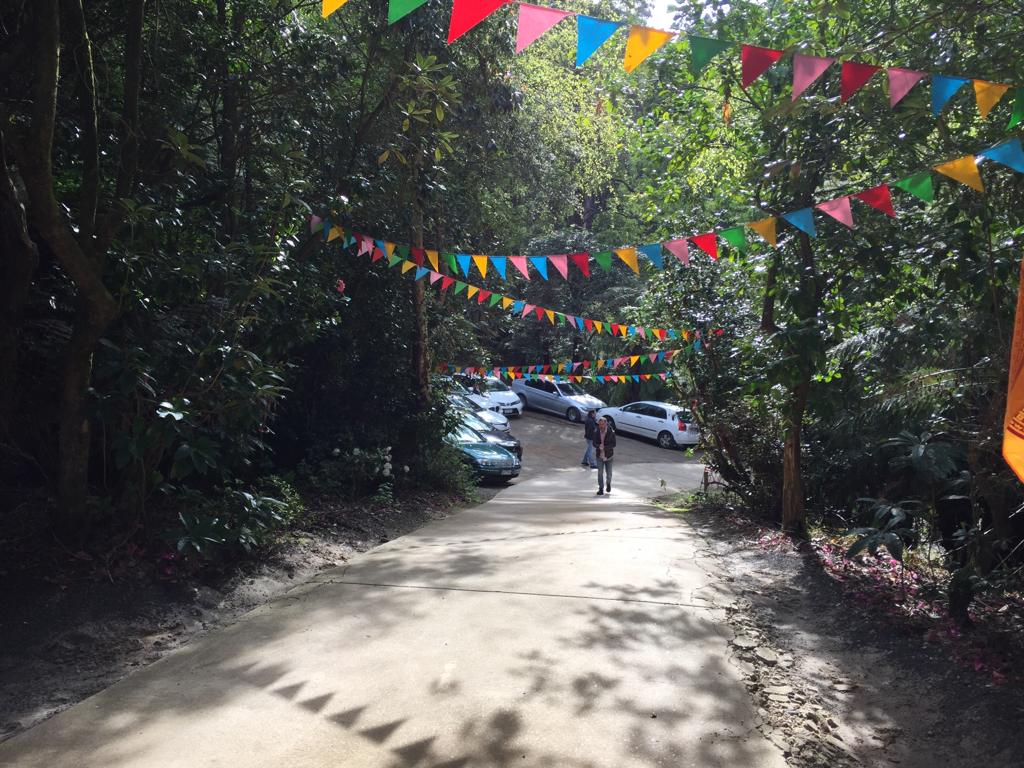


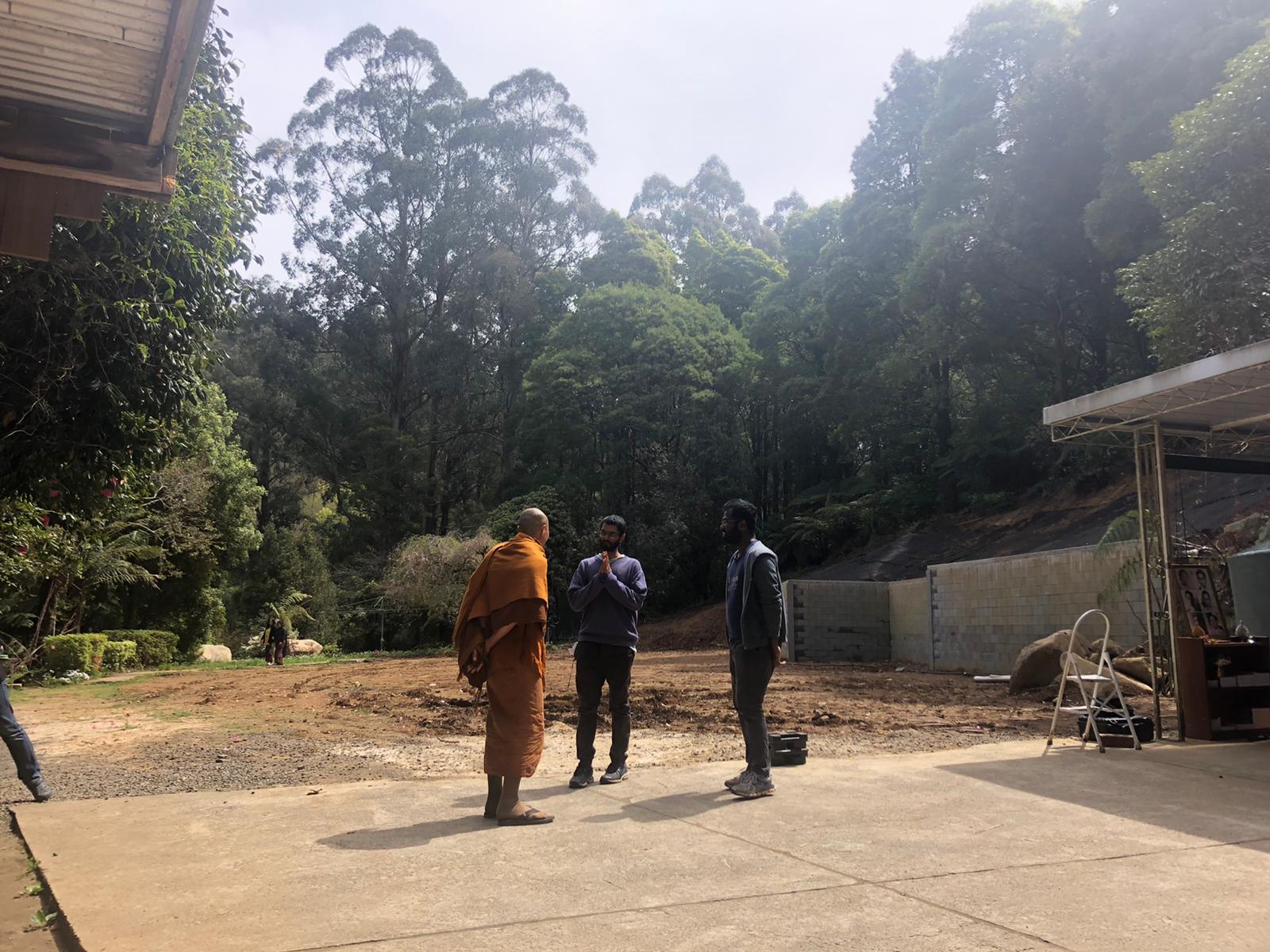


To end an epic Vassa, me, Xeyiing and Dara decided to make it a full day of practice and stayed for afternoon and evening meditation. It was truly a beautiful day, and a beautiful end to the Rains.
I definitely did not have a full-on hardcore Vassa like other practitioners did, but I put in some effort during the Rains, and that's something I rejoice in and am contented with. Ajahn said yesterday mudita or appreciative joy is something that is unique to the Buddha's teaching. It's alright to pat yourself on the back hehe.
Going forward, I aspire to amp up my dana (generosity) practice - I find I'm lacking in this area. Dara is super strong in her dana practice so I'm gonna be rubbing off her for that one.
I also aspire to refine my sila (morality). Yesterday Ajahn was talking about sila and how it creates safety for the world and for oneself. He said that in keeping your precepts well, you create trust in yourself that no matter how far you fall, there is a certain standard you will still adamantly uphold - the Five Precepts. No matter how badly you're doing, you can take solace in that. He also told us about a thought-experiment Ajahn Vajiro sometimes mentions: imagine if everyone in Melbourne kept the Five Precepts. We wouldn't need keys or policemen. That's the kind of world we can create within the monastery, but when we leave, we have to be careful.
He then started telling all these epic stories of Krooba Ajahns (senior teachers in the Thai Forest Tradition) who have kept such good sila in this and past lives that minimal physical harm comes to them. These stories sometimes sound hard to believe so I won't post them here. All I know is, I want to be that powerful. This is true safety -- one of those things no amount of wealth, fame and power can afford you.
Ajahn said his teacher LP Liem doesn't talk too much about the brahma-viharas (loving-kindness, compassion, appreciative joy and equanimity) because if you're really keeping sila in your heart, these qualities arise naturally.
So yes, I hope to fine my sila till it's imprinted in the heart.
And of course, keep going with the meditation hehe.
So grateful for all these blessings!!!
Okay, I think that's all for now - I should really get back to studying sociolinguistics man.
Metta!
I wrote this note a while back, and it's been sitting in my Evernote ever since. It was a pretty personal reflection to me at the time, but I think I'd like to share it. Probably a bit ironic / irrelevant at the moment given what happened to my arm, but most of this stuff still holds.
--------------------------------------------------------------------------------------------------------------------------
--------------------------------------------------------------------------------------------------------------------------
On a plane back from Malaysia to Melbourne. It's a daytime flight, so I have all this time. Also kinda felt like writing stuff.
This past year has been interesting. Probably a lot of things were triggered by the paradigm shift, I feel like I'm returning to 'me' - whoever or whatever that is. I feel more authentic and true to myself, trying to do things from understanding rather than force or willpower or obligation.
I think a big thing is also climbing. Yesterday, Ryan said "climbing is such a personal thing". I agree - but I guess sport and every other kind of thing can be seen in that light. For me, climbing has been a more obvious way of symbolising our human potential.
A route is known as a 'problem'. The aim of the problem is to get to the top. Just a stream-of-consciousness type of reflection on the whole process: I'll look up at the problem, assessing a possible combination of hand- and footholds that I could use. But I realise I'm never that fixated with reaching the top, or that when I do, there isn't a super gratifying exhilaration or anything like that, or if there was some kind of pleasurable feeling, it's quite fleeting. In short, 'topping' for me is not really the focus of the climbing. I guess there is a big sense of relief when you do reach the top, kind of like 'my work is done here'. But it's not like fireworks, you know?
The best part of climbing for me is overcoming a part of the problem that was previously a hindrance, and the mindsets and efforts behind all that. The feeling of falling off the wall - acknowledging that I don't know where to place my limbs, or that I can't do it because everything just hurts right now and I know that and that it's okay. So then finding my feet on the ground, looking up at the part of the problem I was stuck at, and thinking - okay, how can I make this work? Where should I place my hands and feet? How should I position my body? And then trying that out, maybe immediately or after a couple days when the body is refreshed. The best part is getting that much further in the problem, even if it's just a little bit. In the words of Miley Cyrus, "it's the cliiiiiiiiiiiimb".
30th August
3rd September
6th September
I think the best lesson I have taken from climbing is the positivity. Everyone ever has heard the words "believe you can do it, and you will be able to". I think I used to shrug this off as a big cliche, and think, yeah sure but people have different capabilities, not everyone can actually do it. It's been interesting bursting this perception - I think it really began with Ajahn Vajiro's talk that Meow kept asking me to listen to -- that there are only three things we as Buddhists believe:
- The Buddha existed and he was fully enlightened.
- There is causality.
- Human beings can be trained.
That's it. That's it.
And then there is the recognition of the three fetters:
- I am somebody.
- I need to do something.
- I don't know if I can do it or if it's the right thing to do.
So because there's no assumption that there is a limit, or that there is a ceiling, the sky really is the limit here. Well no actually, the Deathless, the Unconditioned is the 'limit'. So the Buddha's remark that "whatever you think and ponder on, that becomes the inclination of your mind" is so powerful - because there's no assumption that this thing is within your capability or not, but that, if you think it is, then it could be; if you think it is not, then it is not.
That's powerful stuff. Meow and KahHoe have also been forces of positive energy - I don't think they ever impose some kind of perception on me, like, you are this kind of person, you can do this, you cannot do that. There is only: just do it. The other day, climbing with Po and just hanging out with them in general, I felt so happy and good. So positive, so encouraged.
I think Ash and Damo have also helped dramatically with breaking these limits in perception. Ash told me once when I said thank you to him something like "you are here because you chose to be". That's just super empowering, because you really have a huge part in your fate. Karma is our heir, karma is our own. "I am born of my karma". He said, if the whole world tells you you can do it, but if you believe you can't, then you can't. But if the whole world tells you you cannot, but you believe you can, then you can. That really sticks with me.
On top of that, watching Free Solo and The Dawn Wall have just been super empowering. I think Alex Honnold and Tommy Caldwell in particular, the vibe they gave me was not like some peppy, highly motivational inspiring 'YOU CAN DO IT' marketing -- the belief that it is possible was just such a nonchalant affair, so ordinary and so blatant as a modus operandi / conviction that it was probably kind of jarring, because like, wow, how can you believe that you can climb 3000ft without ropes? How can you believe that you can climb a vertical rock wall with only 9 fingers? Just the plain, no-questions-asked 'I'm gonna do it' attitude was sufficient as an approach. Tommy in one of his talks said that The Dawn Wall project was an idea, a spark, not a goal. If he had approached it as a goal, he probably wouldn't have been able to do it.
All these influences, plus the super nonjudgemental, super encouraging and positive culture in Melbourne has really given me a kind of spark of positivity I don't think I had before. Like what Ash said with "if the whole world tells you you can't, but you believe you can" thing -- that belief that it is possible, not as a personality thing, not from sakkaya-ditthi, but almost just believing in the possibility that it can be done -- I now feel that in my heart, or like the center of my being. At least I do for climbing. Still working on the whole enlightenment thing haha!
I noticed the difference this trip back to Malaysia. I don't think I'd noticed before just how negative the environment or thinking is back in Malaysia. People create themselves and one another endlessly. It's so apparent and so common that it seems like nothing, but it is so toxic. Almost leaves a bitter taste in my mouth or a migraine. Things like "no la, you not enough strength one", "it's too hard for you", "you too heavy already, cannot one la" or just plain insults like "what kind of rubbish shot is that", etc (mostly sport references here haha). The judgement, the imposing of perceptions -- without mindfulness and wisdom, the recipient of these words just believes it. It just becomes a solidified view that yes, I am this person, I am like that, this is all that I am, and this is how it will be for eternity. It's like being boxed in the chest, slapped in the face. So that thing that Ash said was so powerful for me, because I was definitely surrounded by these attitudes when I came back - I don't think I'd noticed how prevalent or incessant they were before. I may not realise it but this kind of mindset has probably contributed hugely to my conditioning or sense of self or perception of myself or the world or human potential in general. So keeping in mind that, I believe I can do it. These negative perceptions, although they did definitely affect me and "dull the shine", did not have an overwhelming finality to them that I think I probably gave in to 99.99% of the time in the past. There was a sense of space, it's a very light kind of feeling - that perhaps we are limitless and that it is possible.
So I think I've been able to see this more tangibly with climbing. Not telling myself that I cannot do this problem because it's a super high grade, or at least not being final about it. But leaving the door open to possibility. Perhaps not even thinking "I can do it" or "maybe I can do it", but just a wordless trying without expectation, a wordless spaciousness. Just try. Just fall. Have fun. Don't take it so serious. It's about the climb!
I love that. I love how empowering that is. I love the feeling of, after falling off the wall, just looking at the problem and trying to figure it out, coming back and making it just a little further, maybe holding on a little longer or making it past a certain hold I was stuck at. I love that. Maybe it's still seeking progress, but I love that there's no sense of finality or giving up. That's something I struggled with climbing in Malaysia. I was climbing with Ryan, and he was definitely imposing those negative perceptions on me, like "Don't even try, it's so hard" (definitely not taking it personally, it's all conditioning!!). Like, what is the point you know? Why do you climb? I think I did ask him that -- why do you climb?
I don't really know. It's just fun. The process is fun. Whatever it is, it's really not about topping! I think this is the biggest thing for me. Perhaps for once in my life, it's not about achieving some end-goal.
So transferring this kind of mindset into Dhamma practice? I think with climbing it's a lot more tangible, because it is a physical thing. So you do see your body strengthening up, your arms hurting less, your holds getting more solid, your technique flowing better. You do see tangible outcomes of your mental and physical efforts in how much further you progress in the route, or things like duration of holds, and so on. With Dhamma practice, a lot of it is the mind, and the mind can honestly be so tricky. I think I'm speaking particularly about meditation, where I still struggle with my breath.
Recently what I've been trying is just dropping the idea that "this is tricky" - I noticed I've built into my perceptions that "this is effortful, this is difficult" because I've struggled so much with it in the past. That kind of mindset really doesn't help. Meow and Aunty Pam recently have said, "It's actually such a simple thing". And so, working from that kind of thinking is actually opening up the mindset of "I can do it". And recognising that it really is a super easy thing. The breath is right there. Just chill out and take a look, you know?
I think if there's any frustration around it, it's just the three fetters operating.
"I am a Buddhist meditator, I need to be able to watch the breath with ease and achieve something given all the time and effort I've put into my practice, but I really don't know if I can do it / don't think I can do it!"
Drop, drop, drop. Let go, let go, let go. Take a look: what happens when you go with the wordless spaciousness of possibility?
Laptop battery is dying.
Crash course
2 weeks till I'm out of the sling.
I've been having a hard time since the accident. Yes, lots of gratitude and joy -- but also suffering, of course. Ajahn Hasapañño the other day said I was getting a "crash course on the First Noble Truth, no pun intended" (he's the best).
I'm just gonna be really honest about how I feel right now. In many ways, I feel like I haven't been doing very well. I feel like I'm not practising well, my meditation hasn't been as consistent as what it was. I think that's taken a toll on my self-esteem because no matter how bad I was doing in life, I was always sitting consistently. I'm putting in more effort to pull back and reestablish that consistency, but it hasn't been the same.
Which fair enough -- conditions are different. The whole arm and foot situation is just making me less mobile in general. Not being able to work out or even go out for very long is incredibly frustrating. I feel like the whole thing has crashed my flow - my social life, exercise regime, uni routine, etc. I feel like I'm just waiting for this whole thing to pass so that normalcy may resume.
That's kind of scary when I think about it, because that's still time passing, whether or not I want it to, and whether or not I'm making best use of it. That's like being totally reliant on conditions - totally disempowering.
I've been escaping the discomfort and finding pleasure through K-dramas (judge me all you want), I've been moody and emotional and grouchy, I've been really scattered on some days, really mentally drained, dreaming way too much at night to really feel rested.
I've also been quite frustrated and concerned about uni. I'm doing the best that I can, giving it 100%, putting so much effort into it that it's not even funny. It's been frustrating because I definitely feel less focused, and things take way longer to get done. At the start of the semester, I was already feeling drained and unmotivated, already having to push myself to perform. Things are just harder with this whole situation.
But in some ways, I feel more free.
Because of these restrictions, I've been telling myself 'it's alright'. I've been telling myself I'm doing my best, and that's enough. Because if you think about it, how can your best not be enough? Your best is the limit of what is possible given the present conditions. What lies beyond that is impossible. So it is impossible to do less than your best, no matter how shit you think it is. I'm giving it my best, and that is enough -- it has to be.
'Die friends'
This experience has taught me a lot about the value of friendship. In this talk by Ajahn Jayasaro, he shares a Thai idiom: there are two kinds of friends - 'eat friends' and 'die friends'. An 'eat friend' is someone who will eat with you -- particularly if you're paying -- but when times get tough, they disappear. But a 'die friend' is someone who will die for you.
I felt so touched and paiseh (translation for non-Malaysians: embarrassed / shameful / shy) for troubling Gülsüm when she offered to stay over to help with cooking and things. She said something like "If I can't do this for you, then our friendship means nothing." That shut me up and I felt so blessed. We don't even see each other that often, like not even on a weekly basis type of thing.
The past few months, I've been introspecting and pondering the harshness of life with Asanga. The guy is like doing some epic traveling, the quinessential Eurotrip, but we've been in touch like he's in Melbourne (plus time difference). Makes me think distance isn't a physical thing; distance is in the heart. You could be next to each other but miles apart. There's no real excuse, if that person matters enough (then again, people connect and express themselves on different levels, all good).
Massively grateful for my 'die friends'.
Peace ✌️

Close your eyes and you will see clearly
Cease to listen and you will hear truth
Be silent and your heart will sing
Seek no contacts and you will find union
Be still and you will move forward on the tide of the spirit
Be gentle and you will need no strength
Be patient and you will achieve all things
Be humble and you will remain entire
- A Taoist teaching